
In our latest archived paper research we report the development of a robotic formulator which can semi-autonomously discover new pharmaceutical formulations. In this joint effort with David Shorthouse (UCL School of Pharmacy) we developed a process whereby a large (ca 8k) space of potential formulations is streamlined into a representative design space, then made by a liquid-handling robot. The ability of these formulations to solubilise a poorly-soluble drug candidate is then assessed and an algorithm predicts what formulations should be made next. This kicks out a code to initiate another set of experiments that the robot can conduct. Thus, a human’s job is made relatively simple – putting some powder in a well plate, moving about a well plate, and pressing a few buttons on the computer. The robot does the rest of the work.
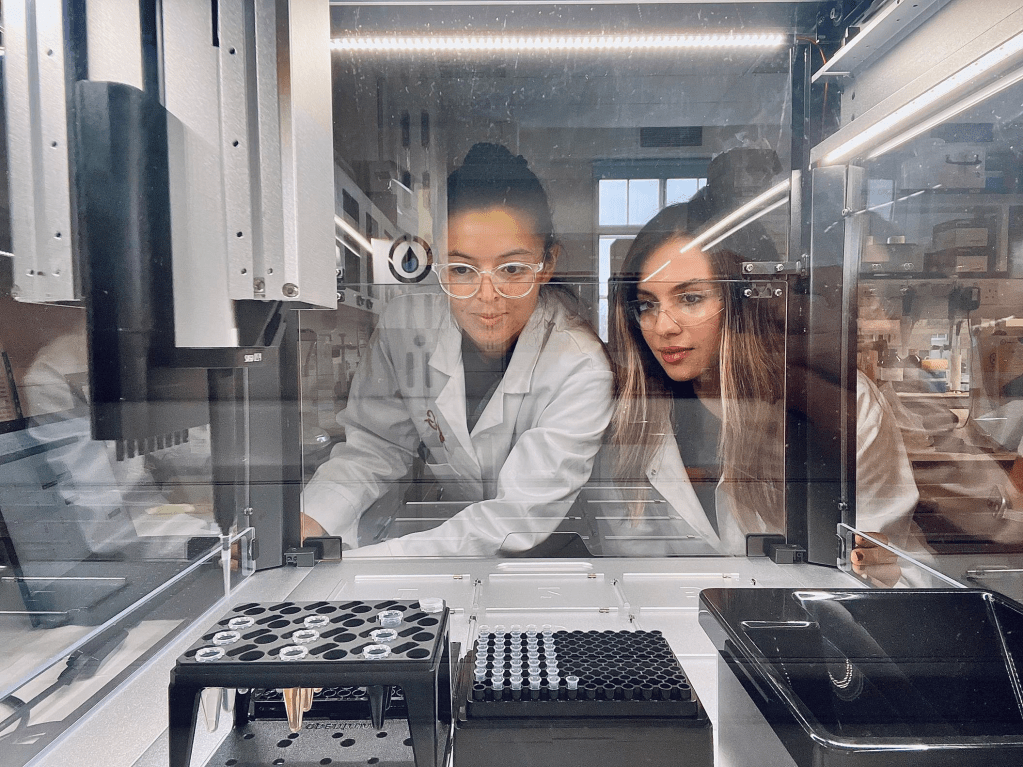
Image: By Tianyang Liu, Feat Antonia Gucic, Oz Oztekiner, and TonTon the Lab Robot.
Escaping the data demands of machine learning?
One thing we think is neat about this workflow is that we don’t have to have any data to start with. When you talk about machine learning, often the first response you get is “ah, but you need so much data.” In our system you can start without any prior knowledge of how to formulate the drug, the robot starts exploring as efficiently as it can do, guided entirely by experimental observations. As it goes along it develops its own predictive algorithms to try and generate the best lead formulations that it can.
How good is it?
We think it’s very efficient. Firstly, compared to a human working alone, the system can explore 7 times as many formulations in 6 days as a human can, whilst requiring a quarter of the time that a human would spend in the lab. In this time we calculate that the robot discovered formulations in the top 0.05% of those possible. The robot is also good at working with small samples, so we predict that there’s big efficiencies in the use of chemicals and plasticware as well.
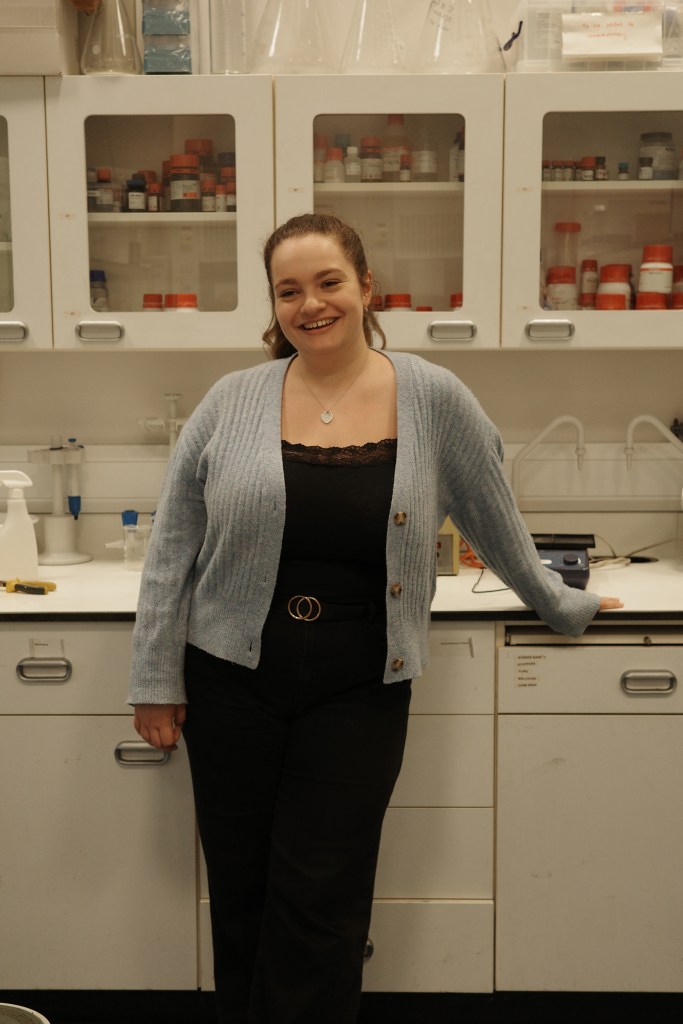
The work was done by Helena Ros, who has had a meteoric start to her time in the group, developing this system during her mini-project at the start of her PhD. She’s now moving onto developing concentrated antibody formulations in affiliation with Croda. She dyed half the lab yellow during the course of experimentation.
 The Cook Lab
Leave a comment